
Choosing the right shower can transform your bathroom into a more comfortable and relaxing space. With so many different types of showers for bathrooms, it is important to understand how each option works and what suits your space, water pressure, budget, and personal preferences.
Whether you are designing a new bathroom or upgrading an existing one, the right shower can improve both functionality and style. Here is a complete guide to help you make an informed decision.
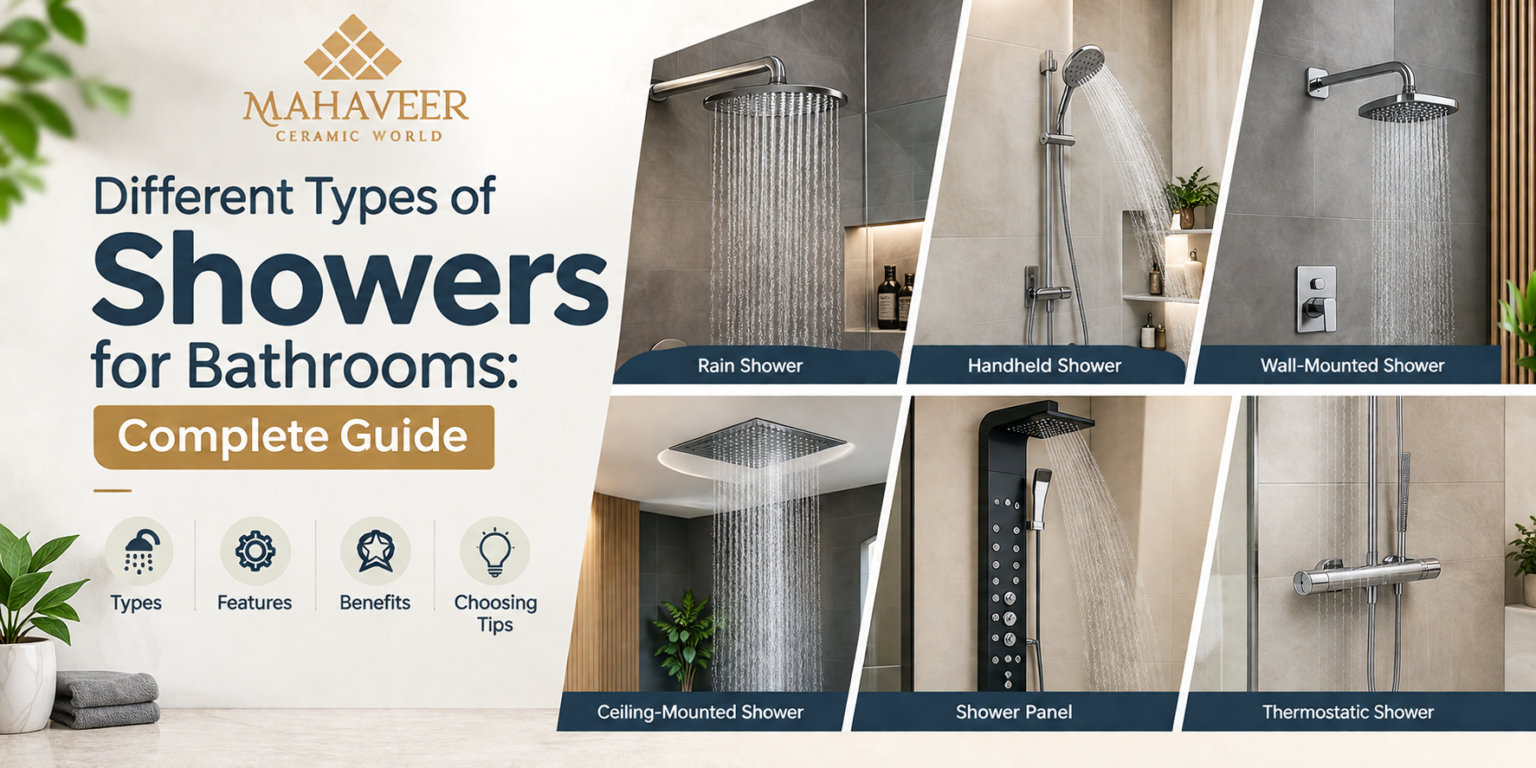
1. Rain Shower
A rain shower is designed to create a gentle, rainfall-like flow of water from above. It is usually installed on the ceiling or high on the wall and provides a relaxing shower experience.
Rain showers are ideal for modern bathrooms and work particularly well with spacious shower areas. However, they may not be the best choice if you prefer strong water pressure.
2. Handheld Shower
A handheld shower is attached to a flexible hose, allowing you to direct the water wherever you need it. This makes it a practical choice for families, children, and people who want greater control while showering.
It is also useful for cleaning the shower area and can be combined with a fixed shower for added convenience.
3. Fixed Wall-Mounted Shower
The traditional wall-mounted shower is one of the most common bathroom shower options. It is fixed to the wall at a comfortable height and is available in various designs and finishes.
This type of shower is simple, practical, and suitable for bathrooms of almost any size. It can also be paired with adjustable showerheads for better control.
4. Thermostatic Shower
A thermostatic shower system helps maintain a consistent water temperature while you shower. It can reduce sudden temperature changes when another tap or appliance is being used.
This makes thermostatic showers a convenient option for households where comfort and temperature control are priorities.
5. Body Shower
A body shower uses multiple shower jets installed around the shower enclosure to spray water from different directions. It can provide a spa-like experience and is often found in luxury bathroom designs.
Because multiple outlets may require additional plumbing, installation can be more complex than with a standard shower.
6. Electric Shower
An electric shower heats water within the shower unit, making it useful in homes where hot-water availability may be limited. It can also provide greater independence from the home's central hot-water system.
Before installation, check electrical requirements and choose a model appropriate for your bathroom setup.
How to Choose the Right Bathroom Shower
When comparing shower types for bathrooms, consider your available space, water pressure, plumbing arrangement, preferred shower experience, and budget. The shower's finish should also complement other bathroom fixtures, such as taps, faucets, and accessories.
For smaller bathrooms, a compact wall-mounted or handheld shower can be a practical choice. Larger bathrooms offer more flexibility for rain showers, body jets, or complete shower systems.
Final Thoughts
Understanding the different types of showers for bathrooms makes it easier to choose a system that matches your needs and bathroom design. From simple handheld models to luxurious rain and body showers, each option offers different benefits.
Focus on functionality, water pressure, installation requirements, maintenance, and design to create a bathroom that is both stylish and comfortable.